
Author’s Note: The upper blog image was created using Gemini AI. It came out pretty good. BUT, there’s a typo with the word “sketches” that is misspelled ” as “skeches.” Yikes. I didn’t notice, but my husband did. I tried to fix it after the post date without success. I decided to leave it as a lesson to myself that AI makes big, bad, ugly mistakes. The lower blog image shows my actual character sketches.
When I wrote Willful Obsession, I didn’t conceive that there would be a part two or three. I did brief character sketches, but only for the few main characters.
Now that I’ve begun writing part two of Willful Obsession, I crave robust character sketches. Let me emphasize that “writing” includes thinking and planning all aspects of the story, not just writing a chapter. I learned about character sketches in my college fiction classes, blog posts, and videos. Combining the best aspects of each, I created a template.
Why is this necessary? For several reasons. First, I want to be consistent with what I wrote before. Second, I forgot what I wrote before, the details such as a particular sports cap that a minor character wore. Now that I’m reviving a minor character and making him a bigger player, I want to get the sports team right. Importantly, I want to get their physical description, mannerisms, age, motivations, speech patterns, etc., consistent too.
Additionally, these sketches give me ideas to draw from when I’m writing a scene with the character. For example, if a character has a long, blonde braid that swings when she walks in book one, I might have her fiddle with it when she’s anxious in book two.
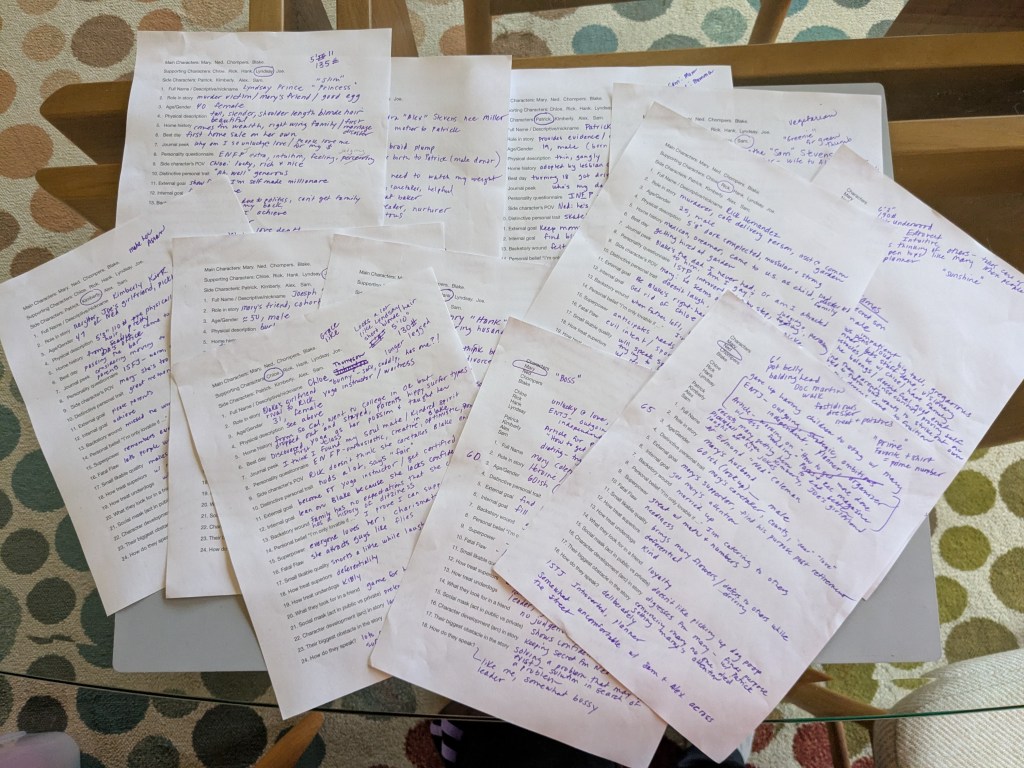
What does my template include? Here’s a partial list of my character sketch:
- Full name (I often forget character last names!)
- Age
- Peek into their journal (this gives an insight of what they say to themselves)
- Side character point of view (what another character might say privately about this character)
- Backstory (what past pains might motivate this character?)
- Story arc (this is probably the most vital because I want characters to show growth)
- Conflicts (what internal and external conflicts is this character trying to solve?)
- How they speak (I don’t want all the characters sounding the same)
- Myers-Briggs personality type (more below)
I want to expand on the last bullet. Maybe you’ve taken the Myers-Briggs test? I have more than once. Although some scientifically debunk its usefulness as a life predictor, I like it because it provides a foundational outlook to a character. For example, Wayne, a character from Willful Obsession, is an ENTP, an inventive, enterprising, and versatile character. He happens to be a criminal who’s bright and likes to take shortcuts for his benefit, and that fits the story.
Creating a character sketch for each person (and dog!) in the story took tedious patience, but I hope that it will create a better story. (I have fifteen sketches for part two, so far!).
Credit: Some inspiration from this post came from Reedsy.
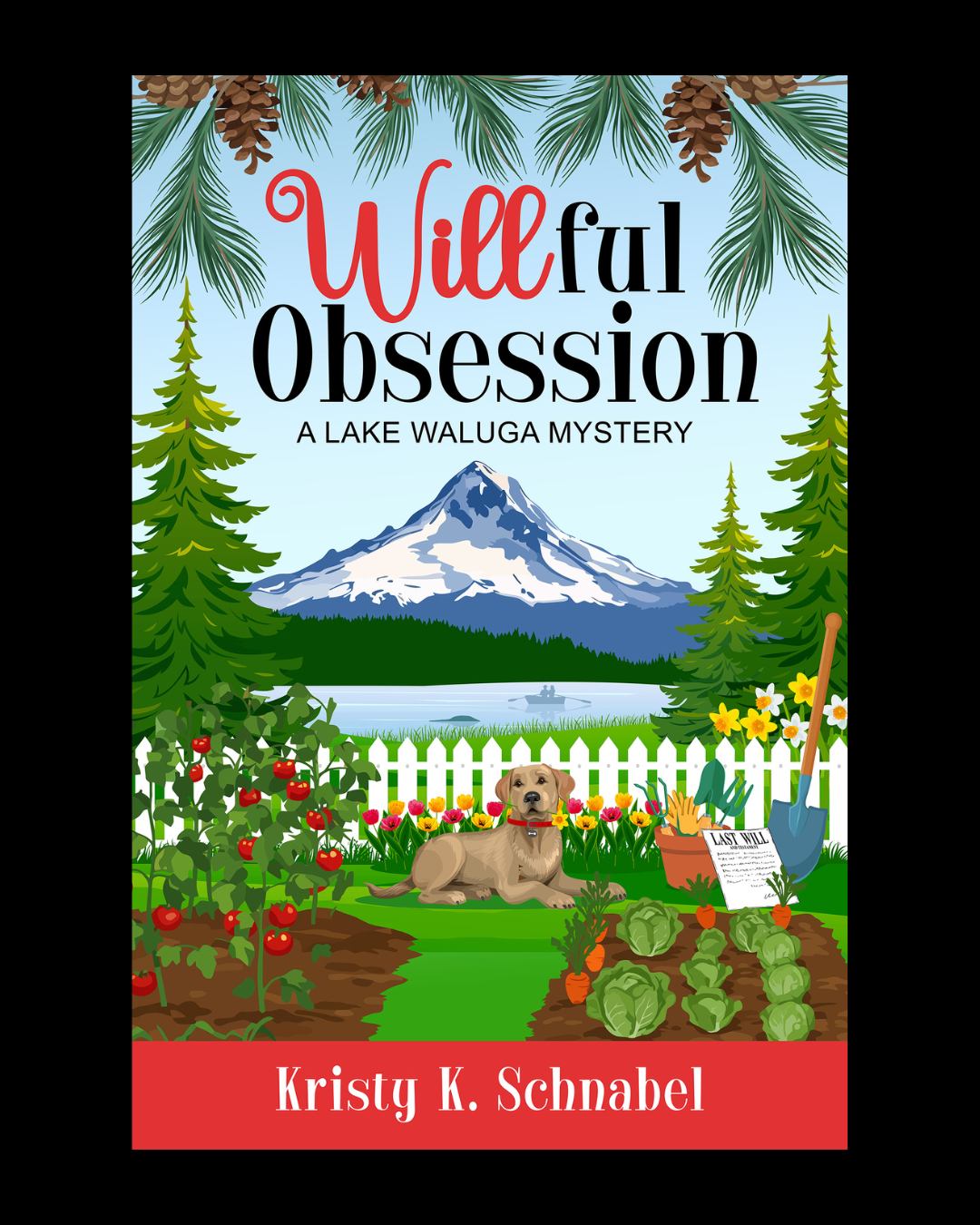
If you want to escape to a compelling, cozy mystery, check out Willful Obsession: A Lake Waluga Mystery. If you admire strong women amateur sleuths, suspenseful stories with surprising twists, quirky characters, a charming town with loads of secrets, community gardens and friendly neighborhoods, and most of all love animals, this story is for you. For reviews and to learn more head here.
 Kristy Schnabel
Leave a comment